
Water
Low-flow fittings across all rooms, linen-reuse by default, and drip irrigation on the lawns timed for dawn, when the least is lost to the sun.

Responsible luxury
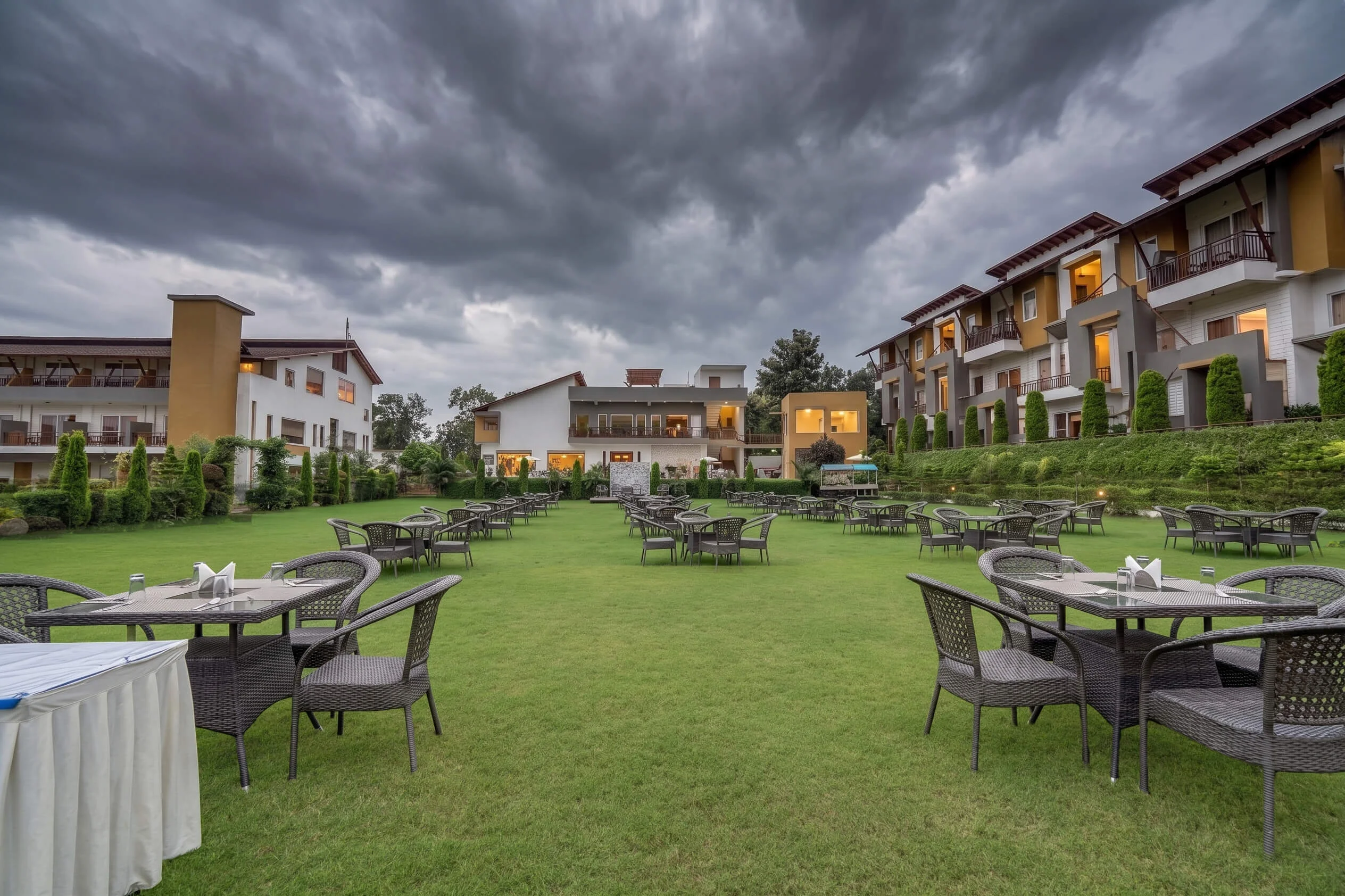
Six acres at the edge of the sal forest come with an obligation: run the resort so the forest never notices it is there.
Our commitments
Not a policy document — day-to-day operating habits, honestly stated and improved every season.
Low-flow fittings across all rooms, linen-reuse by default, and drip irrigation on the lawns timed for dawn, when the least is lost to the sun.
Solar-assisted water heating, LED lighting throughout, and cottages designed for daylight — the power backup exists for guests, not for waste.
Segregation at source, kitchen compost feeding the gardens, and a steady move away from single-use plastics — glass bottles in rooms, refill stations for treks.
The kitchen buys from Patkote's farms first; furniture and repairs go to local carpenters. Money spent here should stay here.
Exterior lighting kept low and warm for nesting birds, no fumigation on the greens, and safaris run strictly by Corbett's rules with trained naturalists.
Local-first hiring, fair wages, training, and guest experiences — the folk night, the cycling trail — that put income directly into the village.
Life on land
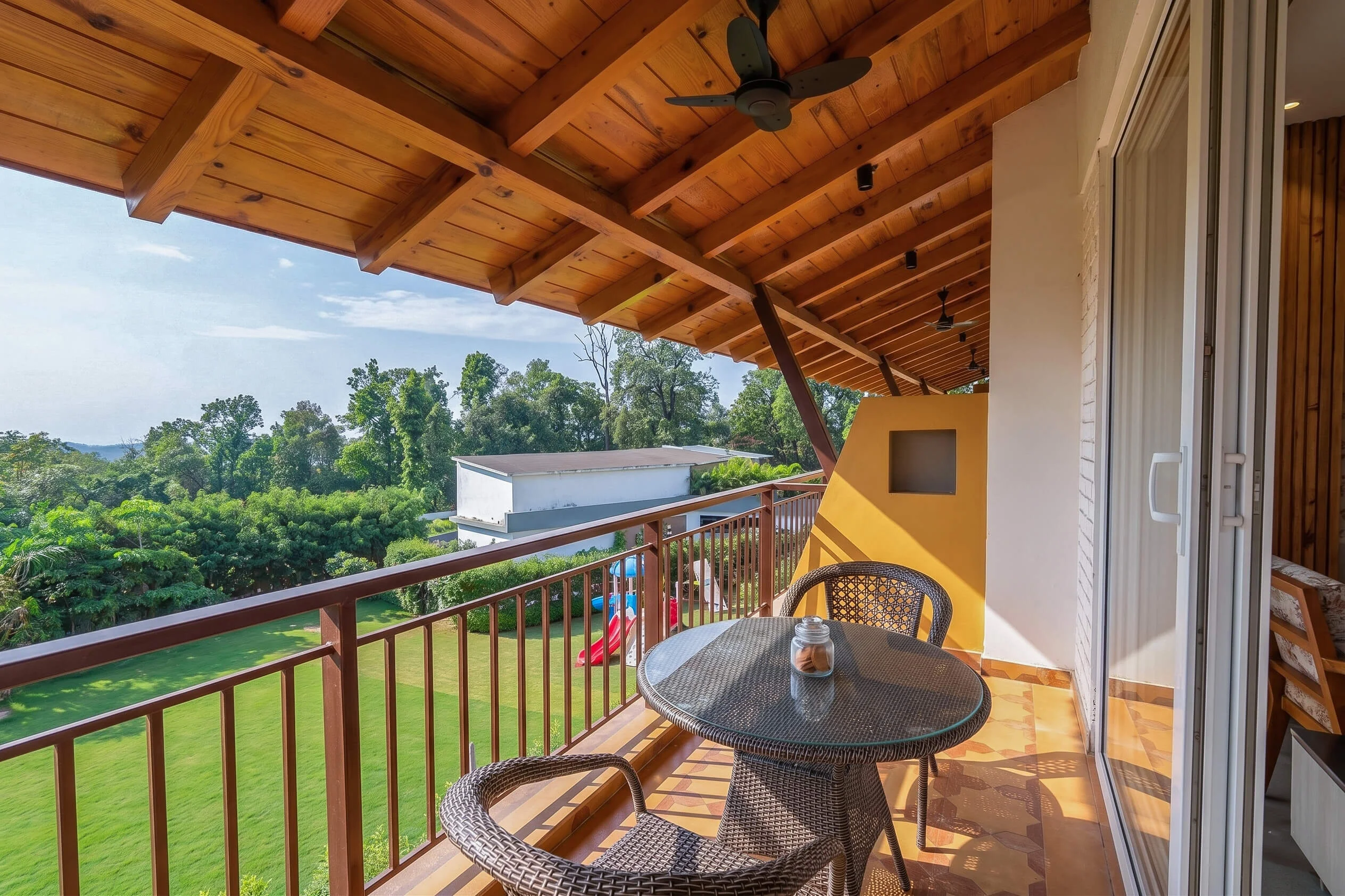
The property line is a handshake with the forest. We plant native sal and saagwan (teak) on our six acres, keep the canopy corridor unbroken along the boundary, and leave the grass long where the insects breed.
Guests wake to birdsong because the birds stayed — and to the calls of Bhalon's peacocks, which the village is famous for and which treat our lawns as their own. That is the metric we care about.
Taste it
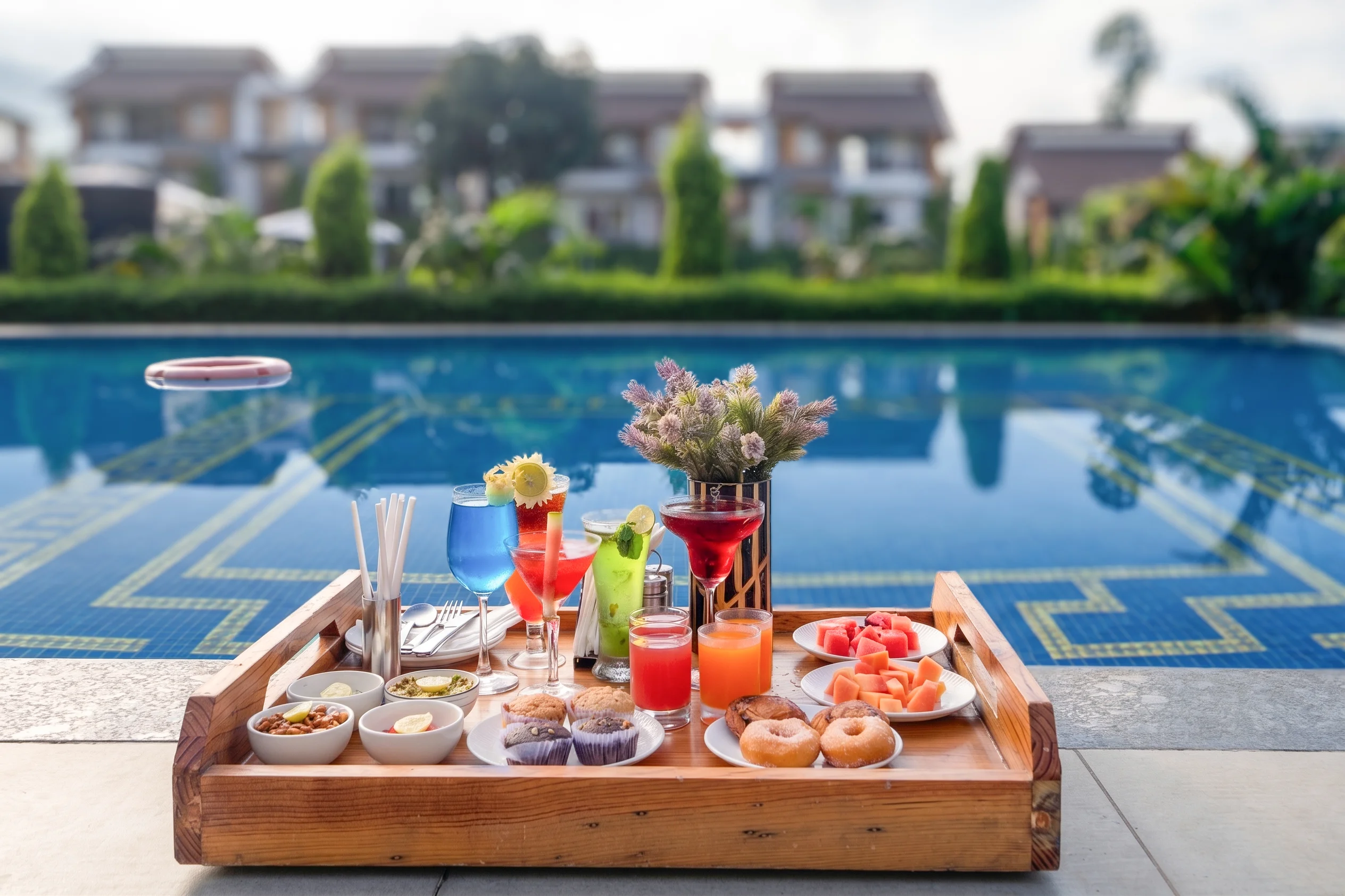
The kitchen garden supplies herbs and seasonal vegetables straight to the menu; what it cannot grow, Patkote's farms usually can. Compost from the kitchen closes the loop back into the soil.
Ask the restaurant what is from the garden today — the answer changes with the week, which is exactly the point.
Travel gently
Carry a refillable bottle, reuse linen where you can, keep safari distances legal, and choose the village cycling trail — the tea stop pays a household directly.
See our community work